
Introduction
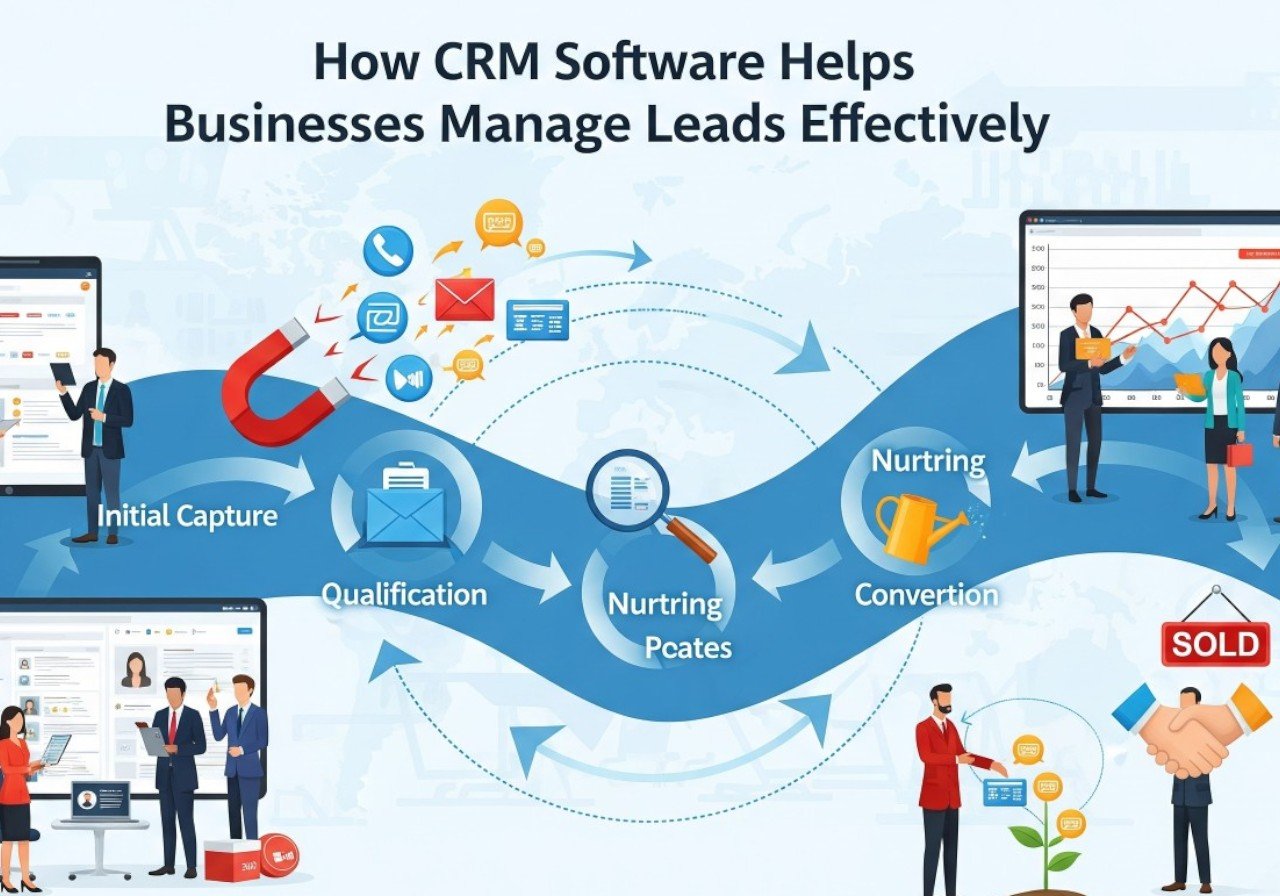
Generating leads is crucial for business growth, but managing them efficiently can be challenging without the right tools. Many businesses lose potential opportunities simply because they fail to track leads systematically. Customer Relationship Management (CRM) software solves this problem by providing a structured way to manage leads, nurture prospects, and convert them into loyal customers.
CRM software centralizes lead information, tracks interactions, and automates follow-ups, ensuring that no opportunity is overlooked. By using CRM effectively, businesses can improve conversion rates, enhance customer relationships, and drive sustainable growth.
Section 1: What is CRM Software?
CRM software is a platform that organizes and manages all customer and prospect interactions. It stores essential data such as contact details, communication history, inquiries, and purchase intentions.
Modern CRMs also include lead scoring, analytics, and workflow automation features. These tools help sales and marketing teams prioritize high-value leads, nurture prospects effectively, and make data-driven decisions.
Section 2: Key Lead Management Features of CRM Software
- Lead Tracking: Monitor leads from initial contact to conversion in a structured pipeline.
- Lead Scoring: Assign scores based on engagement and potential to prioritize follow-ups.
- Automated Follow-Ups: Send reminders, emails, and notifications automatically to nurture leads.
- Segmentation: Group leads based on demographics, behavior, or source for targeted communication.
- Pipeline Visualization: See where each lead is in the sales funnel for better planning.
- Integration with Marketing Tools: Align marketing campaigns with lead management efforts for consistency.
Section 3: Benefits of CRM for Lead Management
CRM software provides significant advantages for managing leads effectively:
- Increased Conversion Rates: Prioritizing high-value leads and nurturing them properly leads to more successful conversions.
- Time Efficiency: Automation of follow-ups and reminders frees up sales teams to focus on relationship-building.
- Better Organization: Centralized data ensures all leads are tracked, reducing the risk of lost opportunities.
- Personalized Engagement: Insights from CRM allow personalized communication that resonates with prospects.
- Improved Forecasting: Track trends in lead generation and conversion to plan resources and campaigns more effectively.
For example, a B2B company can use CRM to track incoming inquiries, assign them to the right sales representative, and follow up at optimal times. Similarly, an online retailer can use CRM to identify customers who showed interest in a product but didn’t complete a purchase and send personalized offers to encourage conversion.
Section 4: Tips for Maximizing CRM for Lead Management
- Keep Lead Data Accurate: Ensure all contact details, interactions, and notes are up to date.
- Automate Wisely: Use automation to manage repetitive tasks but maintain personalized communication.
- Regularly Review Lead Scores: Update scores based on engagement to focus on the most promising prospects.
- Integrate with Marketing Campaigns: Align email campaigns, social media, and ads with lead management efforts.
- Analyze Performance: Track metrics such as conversion rates, follow-up times, and pipeline efficiency to refine strategies.
Conclusion
CRM software is an invaluable tool for managing leads effectively. By centralizing data, automating processes, and providing insights, CRM enables businesses to track every opportunity, nurture prospects strategically, and improve conversion rates.
Businesses that implement CRM for lead management gain a competitive edge by turning more prospects into loyal customers, enhancing overall sales performance, and driving sustainable growth. In a market where every lead counts, CRM ensures that no opportunity is missed.